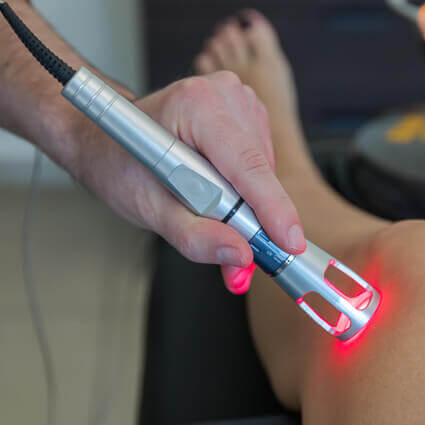
 At Baywest Medical, we use cold laser and Shockwave alongside on-site digital imaging to reduce inflammation, stimulate tissue repair, and guide a treatment plan based on what’s actually happening—not just where it hurts. Cold laser (photobiomodulation) can support healing in inflamed soft tissue, shockwave can help stubborn tendon issues, and digital x-rays help us choose the safest, most effective next step. Used correctly, these tools support your recovery; they don’t replace a thoughtful clinical plan.
Why we use technology (and why we don’t “sell” technology)
Local patients in New Port Richey, Trinity, and Holiday often come in with one reasonable concern: “Is this therapy real, or is it just an upsell?” We respect that question. Technology can be helpful, but only when it matches the condition and the evidence.
Our approach is simple:
- We start with listening. We ask about your pain level and, just as importantly, where you want to be—work, sports, sleep, daily life.
- We evaluate structure and function. That can include movement testing, orthopedic tests, and, when appropriate, on-site x-rays.
- We build a plan using the right tools. That may include chiropractic care, rehab/physiotherapy, and—when indicated—cold laser and Shockwave.
- We stay inside true clinical scope. No hype, no guaranteed outcomes, and no claims we can’t support.
Since 2000, Baywest Medical has focused on results-driven care that respects your time and your choices. Sometimes the best plan uses advanced technology. Other times, something simpler is the right answer—and we’ll tell you that up front.
Inflammation, pain, and why “arthritis” isn’t the whole story
One of the most common things we hear is: “I have arthritis.” That word matters because it explains a major reason cold laser and Shockwave can help some people, and not others.
- “Arth” = joint
- “Itis” = inflammation
In other words, arthritis is inflammation in or around a joint. And in real-world clinical practice, pain and inflammation tend to travel together. That’s why so much of conservative care—manual therapy, rehab, lifestyle guidance, and specific modalities—targets inflammation and the body’s healing response.
That said, not every ache is “just arthritis,” and not every painful area needs the same solution. This is exactly where imaging, clinical testing, and matching the right modality to the right condition makes a difference.
Cold laser therapy explained (what it is and what it’s best for)
Cold laser therapy is also called low-level laser therapy (LLLT) or photobiomodulation. In plain terms, it uses specific wavelengths of light to influence cellular activity in tissue. The goal is to support the body’s natural healing process—often by helping calm inflammation and encouraging tissue repair.
When patients ask whether cold laser and Shockwave are “real,” cold laser is a great example of where the answer is: yes, it’s real—and it needs to be used appropriately for the right condition.
Where the evidence for cold laser therapy is strongest
In our clinical experience and based on how the research trends, cold laser therapy is most consistently helpful when inflammation and tissue irritation are central features—especially when the issue is more acute or clearly soft-tissue driven.
Common indications may include:
- Acute soft tissue injuries
- Tendon irritation and tendon overload patterns (depending on stage and presentation)
- Musculoligamentous strains/sprains
- Inflammatory pain patterns where the tissue is irritated and guarded
In these scenarios, cold laser and Shockwave can be considered—but cold laser is often the gentler starting point when calming inflammation is the priority.
Where the evidence is mixed (and what we will not claim)
We also want to be transparent about the limitations. For chronic and degenerative conditions—and especially for big claims like “regrowing cartilage”—the evidence is much more limited and inconsistent.
So our stance is straightforward:
- We don’t promise cartilage regrowth.
- We don’t position cold laser as a miracle cure.
- We don’t use it as a standalone “one-size-fits-all” fix.
Instead, we use cold laser therapy as an adjunct—a supportive tool inside a broader plan that might include chiropractic adjustments (manual or instrument-assisted, including the Activator Method®), targeted rehab, and mobility work.
What a cold laser session often feels like
Most people describe cold laser therapy as comfortable. You typically won’t feel “heat” the way you might expect from the word laser. Our goal isn’t to overwhelm the tissue—it’s to stimulate the right kind of biological response while keeping care tolerable and practical for busy schedules.
Shockwave therapy explained (ESWT) and when we consider it
Shockwave therapy, often listed as ESWT (Extracorporeal Shock Wave Therapy), has been around for quite some time, but it’s still unfamiliar to many patients. It uses targeted acoustic waves to stimulate a response in stubborn tissue—particularly in chronic tendon-related problems.
When we’re comparing cold laser and Shockwave, shockwave tends to be the more “mechanically stimulating” option, and it’s often best reserved for problems that have lingered and resisted other approaches.
Conditions with strong real-world fit for shockwave therapy
Shockwave has genuinely strong evidence and clinical performance in specific categories, including:
- Plantar fasciitis (especially persistent cases)
- Calcific tendinitis (calcium deposits in a tendon)
- Chronic tendinopathies that haven’t responded to more basic conservative care
For the right “stubborn” condition, we have seen shockwave therapy work extremely well—especially when it’s coordinated with a full rehab strategy rather than used in isolation.
What results typically look like (realistic expectations)
We like to set expectations clearly. Shockwave is not magic, and it’s rarely an overnight fix. A common plan is:
- 4-6 sessions (varies by tissue, chronicity, and response)
- Some people feel change quickly; others notice improvement after 1-2 weeks
- Progress is often best when paired with strengthening, mobility work, and load management
In other words, cold laser and Shockwave can both support healing, but shockwave often works best when we also address the underlying “why” (mechanics, mobility, stability, workload, and recovery habits).
What shockwave therapy feels like
Shockwave can be uncomfortable depending on the area and sensitivity, because it’s designed to stimulate tissue that’s often been “stuck” in a chronic pain cycle. We adjust intensity appropriately and communicate throughout. Our priority is effective care that you can tolerate and complete.
Digital x-rays explained: why imaging can change the plan
At Baywest Medical, we have on-site digital x-rays. We don’t take images just to check a box. We take them when they help us answer a specific clinical question and direct the plan.
Here’s the practical value: symptoms can be misleading. “Where it hurts” is important, but it’s not always the same as “what’s causing it.” x-rays help us see structural factors so we can make better recommendations—and just as importantly, identify what we should avoid.
What x-rays can help us evaluate in chiropractic and rehab planning
- Overall spinal and joint alignment patterns
- Signs of degeneration or structural change that influence technique choice
- Red flags or findings that suggest you need a different workup or referral pathway
- Baseline structure so we’re not guessing from symptoms alone
When we combine the clinical exam with imaging (when appropriate), we can tailor care more precisely. That might mean modifying an adjustment approach, choosing rehab progressions more carefully, or deciding whether cold laser and Shockwave are truly indicated.
How we decide between cold laser and Shockwave (and when we use both)
Patients often ask us which is better: cold laser or shockwave. The honest answer is: it depends on the tissue, the timeline, and the nature of the problem.
Here’s a helpful way to think about cold laser and Shockwave in everyday terms:
- Cold laser is often best when calming inflammation and supporting early-stage tissue healing is the priority.
- Shockwave is often best when a tendon problem is chronic, stubborn, and not responding to more basic conservative options.
- Both may be appropriate when we need to calm irritation and stimulate a more robust healing response—paired with rehab that addresses mechanics and strength.
What matters most: matching the tool to the indication
The thread that runs through all three technologies—cold laser and Shockwave and digital x-rays—is that they support your plan; they don’t replace it.
These tools earn their place when:
- The indication is clear and specific to your condition
- The expected benefit aligns with what the evidence supports
- They fit your goals, timeline, and comfort level
And there are also times we won’t recommend them—when the condition doesn’t fit, when something simpler will do, or when a different approach is safer or more appropriate. We believe that kind of clarity is part of good clinical care.
What a typical visit and plan can look like at Baywest Medical
Our office in New Port Richey is designed to be easy to access (right off State Road 54 near Highway 19) and efficient once you’re here. We respect your time, and we aim to get you meaningful answers quickly—without rushing the decision-making.
A common flow looks like this:
- Conversation first. We listen to what you’re experiencing and what you want to get back to doing.
- Evaluation. We assess movement, joints, soft tissues, and neurological/orthopedic indicators.
- Imaging when appropriate. If it will change the plan, we use on-site digital x-rays.
- Care begins. Many patients can be adjusted on the first visit, and we may begin supportive therapies the same day depending on findings.
- Rehab and follow-through. We pair therapies like cold laser and Shockwave with physiotherapy to stretch, strengthen, and stabilize the area.
We also pride ourselves on the human side of care. From our support staff—Cyndi, Jen, and Hilary—to the clinical decision-making with Dr. Scott Coletti, we want you to feel known, heard, and guided (not pressured).
Where this technology helps most: common local scenarios
In a community like ours, we see patterns. People are working hard, staying active, caring for family, commuting, and trying to push through pain until they can’t. Technology can help—when we use it for the right reason.
1) Auto and motorcycle accidents
After a collision, soft tissue injuries can linger and scar tissue can become a long-term problem if the injury isn’t addressed properly. We focus on getting answers quickly and guiding the joints and soft tissues back toward healthier movement.
- We commonly see whiplash, neck and head injuries, and extremity pain (shoulders, knees, elbows).
- Imaging with x-rays can be important to understand structural factors post-accident.
- Depending on the tissue involved, cold laser and Shockwave may support healing as part of a broader rehab plan.
- We also directly bill insurance for accident cases and regularly coordinate with other doctors when needed.
2) Chronic tendon pain that won’t go away
This is where shockwave therapy often shines. If you’ve tried rest, stretching, and basic care and the problem keeps returning, we may consider ESWT—especially for plantar fasciitis and stubborn tendon issues.
We frequently combine:
- shockwave therapy for stimulation
- Targeted rehab for strength and load tolerance
- Mobility work to reduce repeated strain
This “combo” approach is one reason cold laser and Shockwave can be so valuable when used appropriately.
3) Inflammatory flare-ups and joint irritation
When inflammation is driving pain—whether from overuse, an acute strain, or an arthritic flare—cold laser therapy can be a helpful adjunct. The goal isn’t to chase a miracle claim; it’s to support tissue recovery and calm the irritation so you can move and rehab more effectively.
4) Veterans needing functional, goal-based care
We’re proud to support veterans experiencing lasting physical strain from service. With authorization, eligible patients may access services through the VA Community Care Network. Our focus is practical: improved mobility, reduced stiffness, restored function, and a plan that fits real life.
In these cases, we may use a combination of chiropractic care, rehab, and—when indicated—cold laser and Shockwave, grounded by clear clinical findings and measurable goals.
What to watch out for: red flags of “hype-based” modality marketing
We believe patients deserve straight answers. If you’re comparing clinics or trying to decide whether to try cold laser and Shockwave, here are a few signs a clinic may be overpromising:
- They guarantee outcomes (“This will fix it in 3 visits”) without evaluating you.
- They claim to regrow cartilage or reverse degeneration as a standard result.
- They recommend imaging or modalities for everyone, regardless of findings.
- They focus more on the machine than the diagnosis, rehab plan, and progression.
Technology is only as good as the clinical reasoning behind it. We invest in these tools because they help the right patients—not because they make for flashy marketing.
Key Takeaways
- cold laser and Shockwave are legitimate tools when used for the right condition and stage of healing.
- Cold laser therapy (photobiomodulation) is often most helpful for soft tissue inflammation and acute or subacute tissue irritation.
- shockwave therapy (ESWT) has strong evidence for stubborn issues like plantar fasciitis, calcific tendinitis, and chronic tendon problems that haven’t responded to other care.
- On-site digital x-rays help us avoid guessing by showing structural factors that can change what we recommend—or what we avoid.
- At Baywest Medical, we use technology to support a plan, not replace it, and we won’t recommend a modality when it doesn’t fit the evidence or your goals.
Where to Go From Here
If you’re dealing with pain that keeps returning, or you’re not sure whether cold laser and Shockwave are appropriate for your situation, we can help you sort that out with a clear evaluation and a plan grounded in evidence and experience. At Baywest Medical, we’ll explain what we see, why we’re recommending (or not recommending) specific therapies, and what a realistic timeline looks like for your condition. Schedule pain relief today so we can stop guessing and start moving you toward the goals that matter to you.
Frequently Asked Questions
Is cold laser therapy actually real, or is it just an upsell?
Cold laser therapy (also called low-level laser therapy or photobiomodulation) is a real modality that uses specific light wavelengths to support cellular activity and help calm inflammation. The best results tend to be in acute or inflammatory soft-tissue problems, and we use it as an adjunct within a broader plan—not as a guaranteed cure.
What conditions does shockwave therapy (ESWT) help the most?
Shockwave therapy is commonly used for stubborn, chronic tendon-related conditions, including plantar fasciitis, calcific tendinitis, and chronic tendinopathies that have not responded well to other conservative care.
How many shockwave therapy sessions are typical?
A common course is about 4 to 6 sessions, with some people noticing improvement quickly and others seeing changes after a week or two. Results depend on the condition, how long it has been present, and whether rehab is paired with treatment.
Why do you take digital x-rays for chiropractic and rehab care?
We use x-rays when imaging will help direct the plan. Digital x-rays can show structural factors so we’re not guessing from symptoms alone, which can influence what we recommend and what we avoid for safety and effectiveness.
Can cold laser or shockwave regrow cartilage or reverse arthritis?
We do not claim that cold laser or shockwave regrow cartilage as a predictable result. Arthritis involves inflammation and other joint changes, and while these therapies may help certain pain and inflammation patterns, the evidence for cartilage regrowth claims is limited.
Do you ever decide not to use cold laser or shockwave?
Yes. If the condition doesn’t fit the evidence, if a simpler approach is likely to work, or if another pathway is safer or more appropriate, we won’t recommend the modality—and we’ll explain why.